 Cart
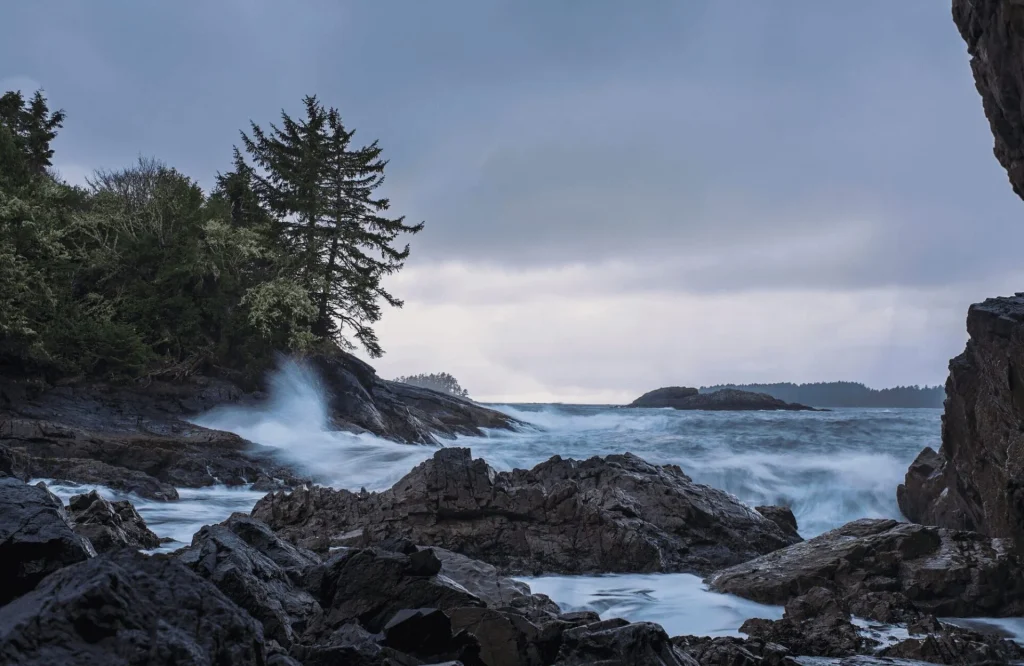
Tofino, on the west coast of Vancouver Island, is known for its rugged coastline, temperate rainforest, and powerful Pacific Ocean. While summer brings beach walks and outdoor adventures, fall and winter offer a different experience: dramatic skies, strong winds, and waves crashing against the shore.
Storm watching in Tofino is a memorable way to experience the wild side of Canada’s west coast. You can watch the ocean from a safe beach viewpoint, photograph the changing coastline, or enjoy the view from a sheltered indoor setting.
The key is knowing where to go, when conditions are suitable, and how to stay safe around the ocean. Here’s how to plan your storm-watching trip.
When Is the Best Time for Storm Watching in Tofino?
Storm watching is most associated with Tofino’s fall and winter seasons, when Pacific weather systems bring wind, rain, and energetic surf to the coastline.
Fall: September to November
Fall is a transition period. Early autumn can bring relatively mild conditions, while later months generally offer more opportunities to experience stormy weather.
This can be a good time to visit if you want to combine storm watching with coastal walks, rainforest exploration, and other outdoor activities. Conditions vary, so check the forecast before planning around a particular storm.
Winter: December to February
Winter is a popular period for storm watching in Tofino. Strong winds, heavy rain, and large waves can create dramatic coastal scenery.
It’s also a good season for a slower getaway, with time to watch the ocean from a sheltered viewpoint, relax indoors, and explore the area between weather systems.
However, winter conditions can change quickly. A storm that looks impressive from indoors may make beach access unsafe. Always follow local warnings and posted closures.
Early spring: March
Stormy conditions can continue into early spring, although individual days vary considerably. March may suit travellers who want to experience the coast outside the busiest summer period.
Planning tip: Don’t choose your travel dates based on a storm forecast alone. Allow some flexibility so you can adjust your plans if conditions become too severe.
For a broader seasonal overview, read our guide to Tofino weather, seasons, and the best time to visit.
5 Best Places for Storm Watching in Tofino
Different beaches offer different views of the Pacific. Some have broad sandy shorelines, while others provide elevated viewpoints or dramatic rocky headlands.
The following locations are highlighted by Tourism Tofino’s storm-watching guide. Choose your viewpoint based on current conditions, safe access, and posted guidance.
1. Cox Bay Beach: Watch Waves Meet the Headland
Cox Bay is a popular location for watching waves break and send plumes of white spray into the air. During stormy weather, the waves crashing near Pettinger Point can make the power of the Pacific especially apparent.
The beach is also a familiar destination for surfers, but storm watching is different from surfing. Large waves and strong currents can be dangerous, even when the shoreline appears accessible.
Best for: Dramatic surf, coastal photography, and observing waves from a safe position.
Keep in mind: Stay away from exposed rocks and the water’s edge. Use publicly accessible viewpoints and obey all signs.
2. Chesterman Beach: A Broad Coastal View
North and South Chesterman beaches offer long stretches of sand, coastal scenery, and views of waves breaking near rocky outcrops.
At the north end, waves can create striking bursts of foam against the headland. The shape of the bay can also mean that wave conditions differ from those at more exposed locations.
Best for: Beach walks, photography, and watching the changing ocean.
Keep in mind: Check the tide and beach-access conditions before walking along the shoreline. Don’t approach rocks to get a closer photograph.
3. Long Beach: Experience the Scale of the Pacific
Located in Pacific Rim National Park Reserve, Long Beach is known for its extensive sandy shoreline. Its large scale makes it a compelling place to observe stormy seas and the movement of waves along the coast.
Rock formations, including Lovekin Rock and Incinerator Rock, add to the scenery. They should be viewed from a safe distance rather than used as storm-watching platforms.
Best for: Wide coastal views, landscape photography, and observing the ocean from the beach.
Keep in mind: Long Beach is exposed to changing ocean conditions. Never assume that a familiar section of shoreline is safe during a storm.
4. Wickaninnish Beach: Storm Watching From an Elevated Viewpoint
Wickaninnish Beach is a particularly useful option for visitors who prefer a viewpoint above the shoreline.
The viewing deck at the Kwisitis Visitor Centre overlooks the beach and has an accessibility ramp, according to Tourism Tofino. The centre can also provide an opportunity to learn about the area’s natural and cultural history.
Best for: Elevated coastal views and visitors who prefer not to walk directly along the beach.
Keep in mind: Check the visitor centre’s current opening status and local access information before travelling.
5. Florencia Bay: A View From Above
Florencia Bay, at the southern end of Pacific Rim National Park Reserve, has a viewing platform a short walk from the parking area. From there, visitors can observe waves rolling into the bay from above.
A trail and staircase provide access farther down toward the beach, but the lower route may not be appropriate in high winds, rising tides, or hazardous conditions.
Best for: Elevated views, coastal scenery, and photography.
Keep in mind: Check tide information before descending. Avoid the wooded trail during high winds and follow all park advisories.
What Makes Tofino’s Winter Storms So Impressive?
Tofino faces the open Pacific Ocean, where weather systems can bring powerful winds and energetic swells to the exposed west coast of Vancouver Island.
The experience involves more than watching waves. You may notice clouds moving rapidly over the ocean, rain sweeping across the beach, and white foam spreading along the shoreline. Wind-shaped trees and driftwood also reveal how coastal weather has shaped the landscape over time.
Conditions are not identical at every beach. The size, direction, and timing of waves depend on the weather system, swell, tides, and the shape of the coastline.
For visitors, this unpredictability is part of the appeal. It is also why storm watching should always be approached with caution.
Storm Watching Safety Tips: What You Need to Know
The ocean can become dangerous even when the weather appears manageable. Tofino’s beaches do not have lifeguards, and unexpected waves can reach farther up the shore than visitors anticipate.
Follow these precautions before and during your visit.
1. Check the Tides Before Leaving
Winter storms can coincide with high tides and storm surges. Higher water levels may narrow the beach, flood access routes, or make it difficult to return to the trail.
Check the tide schedule before leaving and favour a falling tide when appropriate. Never enter a beach or trail that is closed or where rising water could leave you trapped.
2. Stay Away From Rocks and Exposed Headlands
Rocks near the water can be slippery, especially in rain. Unexpected waves, often called sneaker waves, can sweep across rocky areas without much warning.
Watch from a safe, elevated or set-back position. Do not climb onto rocks or stand near the water simply to get a better photograph.
3. Keep Your Distance From Driftwood
Large logs and driftwood may look stable, but waves can move them unexpectedly. During stormy conditions, water can carry heavy debris onto the beach.
Keep a safe distance from driftwood near the shoreline and avoid walking between logs where incoming waves could trap you.
4. Face the Ocean and Watch Conditions
Keep your attention on the water rather than turning your back to take photographs. Watch for changes in wave patterns and move farther away if the water begins reaching your position.
Do not assume that a stretch of smaller waves means a larger wave will not follow.
5. Respect Closures and Local Warnings
Beach access points, trails, and facilities may close during severe weather or dangerous tides.
Check current information from Tourism Tofino and Pacific Rim National Park Reserve before heading out. Follow posted signs and instructions from park staff or local authorities.
For additional coastal safety advice, see Tourism Tofino’s responsible recreation guidance.
What to Wear for Storm Watching in Tofino
Tofino’s coastal weather can feel cold and wet, particularly when rain and wind arrive together. The right clothing makes it easier to enjoy the scenery without becoming uncomfortable.
Pack the following:
- Waterproof jacket: Choose a jacket that protects against rain and wind.
- Warm layers: Wear insulating layers that you can add or remove as conditions change.
- Waterproof footwear: Walking shoes or boots with good grip help on wet paths and muddy access trails.
- Waterproof trousers: Useful if you plan to spend time outside in wind-driven rain.
- Warm hat and gloves: These help you stay comfortable during extended periods outdoors.
- Camera or phone protection: Use a waterproof case or dry bag, and keep electronics secure against wind and rain.
- A change of clothes: Helpful after a wet beach visit, especially if you have a longer drive ahead.
Avoid carrying more equipment than you can manage safely. Strong winds can make umbrellas difficult to use, and loose items may blow away.
How to Plan a Storm-Watching Day in Tofino
A little planning can help you enjoy the coast while leaving room to respond to changing conditions.
Step 1: Check the forecast and tides. Look at wind, rain, tide times, and any local warnings. Don’t rely on the appearance of the sky alone.
Step 2: Choose a suitable viewpoint. Consider the conditions, access, and how much walking you want to do. An elevated viewing deck may be preferable to a beach walk during severe weather.
Step 3: Allow time for changing conditions. The most dramatic-looking beach may not be the safest option on a particular day. Be prepared to change locations or enjoy the view from indoors.
Step 4: Plan an indoor alternative. A café, visitor centre, or comfortable accommodation can make the day enjoyable if the weather becomes too severe for a beach visit.
Step 5: Check conditions again before leaving. Access and weather can change during the day, so verify updates rather than relying on information gathered earlier.
If you’re planning a longer visit, our guide to things to do in Tofino offers additional ideas for your itinerary.
Is Storm Watching in Tofino Worth It?
Yes, if you enjoy dramatic coastal scenery and are comfortable with cool, wet weather. Storm watching offers a different way to experience Tofino, particularly for travellers who want to see the Pacific Ocean at its most energetic.
You don’t need to spend hours walking on an exposed beach to appreciate the experience. A safe viewpoint, suitable clothing, and a willingness to adapt your plans can make a stormy day memorable.
The most important rule is to admire the ocean without underestimating it. If local conditions make a beach unsafe, choose another viewpoint or enjoy the storm from indoors.
Frequently Asked Questions
What is the best month for storm watching in Tofino?
Storm watching is most associated with fall and winter, particularly the later fall and winter months. However, storms are weather-dependent, so no particular month guarantees dramatic waves.
Which beach is best for storm watching in Tofino?
Cox Bay, Chesterman Beach, Long Beach, Wickaninnish Beach, and Florencia Bay are all recognised storm-watching locations. Your best option depends on the current weather, tides, access, and preferred viewpoint.
Is storm watching in Tofino safe?
It can be enjoyed safely from an appropriate viewpoint, but exposed beaches can be hazardous during storms. Stay away from rocks and driftwood, keep well back from the water, check tides, and obey closures and warnings.
Can you watch storms in Tofino without walking on the beach?
Yes. Elevated viewpoints, such as the viewing deck at the Kwisitis Visitor Centre overlooking Wickaninnish Beach, offer an alternative to walking directly along the shoreline. Check current access and facility information before visiting.
What should I pack for storm watching?
Bring waterproof outerwear, warm layers, footwear with good grip, and protection for your phone or camera. Extra clothing can be useful after spending time outdoors in rain and wind.
Can I bring children to watch winter storms?
Families can enjoy coastal scenery, but children need close supervision near beaches. Choose a safe viewpoint away from the water and rocks, follow posted guidance, and leave if conditions become hazardous.
Where can I check the weather and tides in Tofino?
Start with Tourism Tofino’s weather and webcams page for local conditions and viewing resources. Check tide information and park advisories as well, especially before visiting beaches in stormy weather.
Final Thoughts
Storm watching in Tofino offers a chance to experience the raw beauty of Vancouver Island’s west coast. From the broad shoreline of Long Beach to the elevated view at Wickaninnish Beach, each location presents a different perspective on the Pacific.
Choose your beach carefully, dress for the weather, check tides and local advisories, and keep a safe distance from the water. With thoughtful planning, a stormy day can become one of the most memorable parts of a Tofino visit.